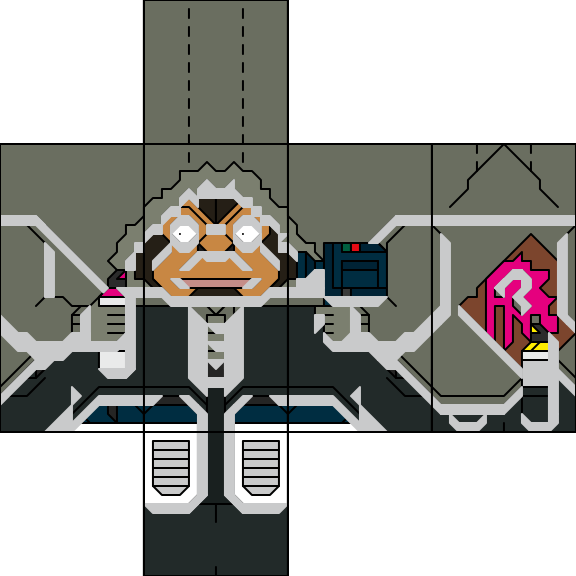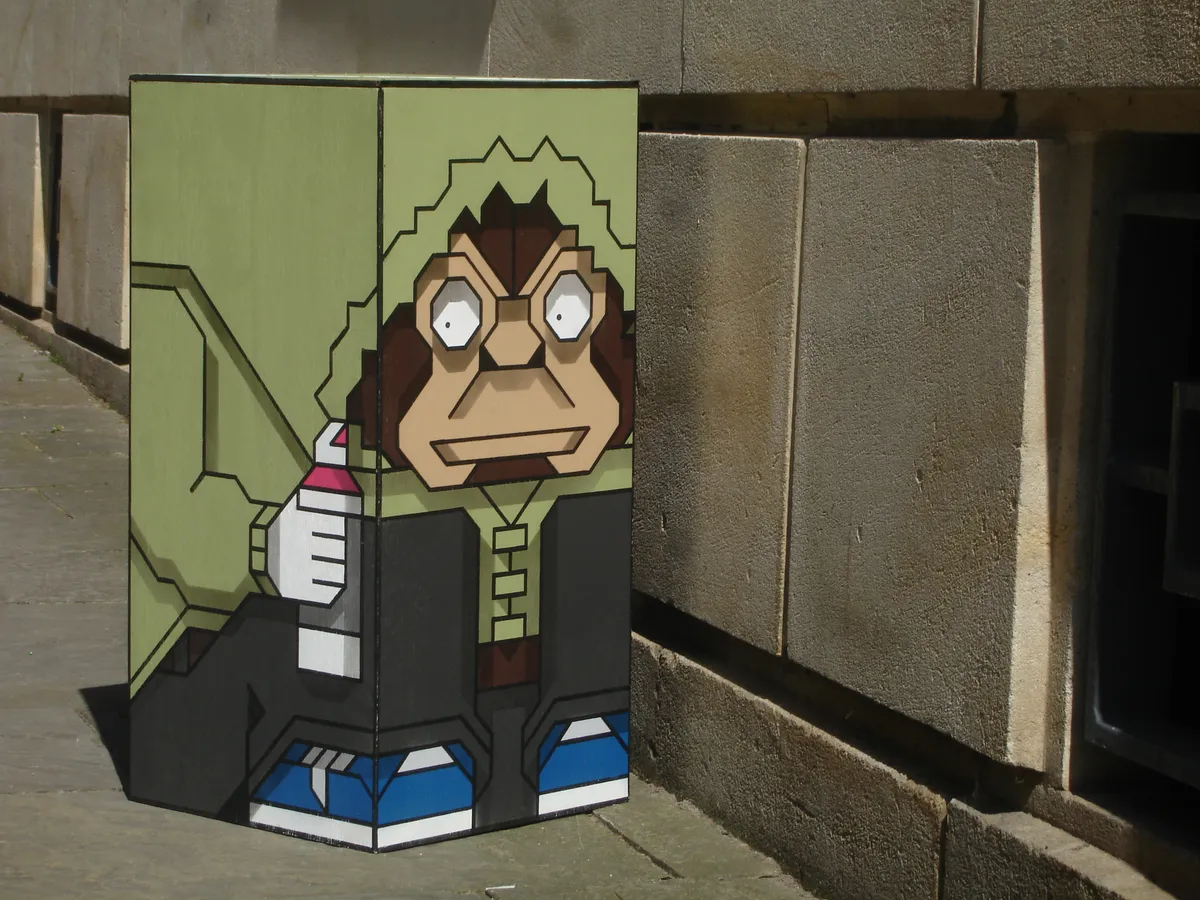
In the summer of 2012, the Banksy Squattie became a very small part of Bristol street art history through participation in the legendary See No Evil project and the associated Longplaya art installation and charity auction.
At the time, See No Evil was considered the UK’s largest permanent street art project, transforming large sections of Bristol city centre into an enormous open-air gallery featuring internationally recognised artists and local creatives alike.
The Original Giant Build
The original idea was ambitious: a huge 2-metre-tall physical Banksy Squattie installation designed for the event.
Unfortunately, reality had other plans.
The oversized piece never quite got fully completed and took a fair amount of damage during transport. Somewhere between giant papercraft engineering experiment and logistical nightmare, it became clear that a more practical solution was needed.
The Plywood Replica
Rather than abandon the project entirely, a smaller plywood replica version was created instead — compact enough to survive the journey and robust enough to actually make it into the exhibition.
Ironically, the scaled-down version turned out to be a much more manageable format and ultimately became the final displayed piece for the event.
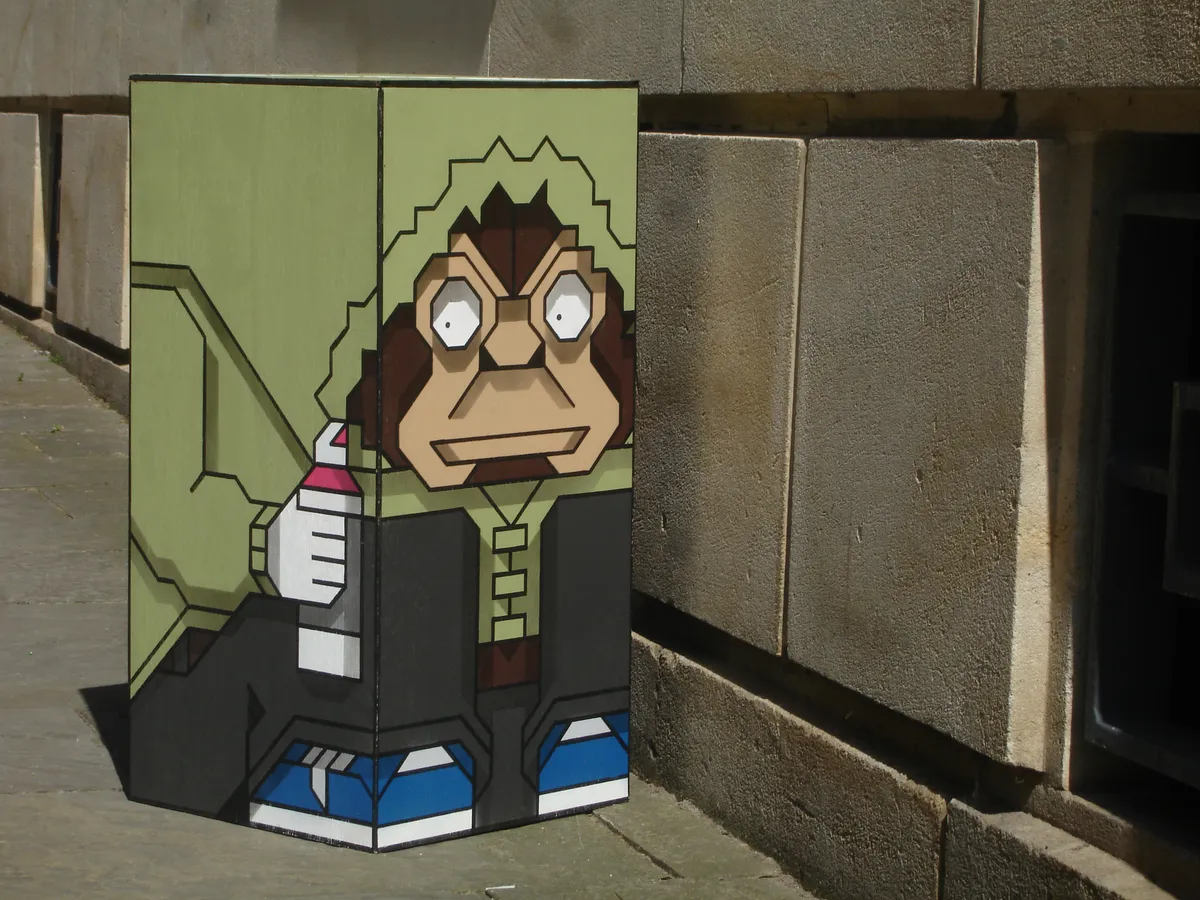 The plywood Banksy character, out and about tagging walls
Longplaya & The Charity Auction
The finished Banksy Squattie became part of the Longplaya installation before later being included in the charity auction connected to the event.
Well... the secret is out and Matt's super-sized Banksy Squattie caused quite a stir at the opening night. The bidding for this unique piece will go down in Bristol folk-lore as a battle of worthy knights who struggled through through a mysterious mist of cider and wine to reach their prize. There might have been some fair maidens involved, not sure.
The piece eventually sold for a whopping £325, with all proceeds going toward local Bristol charities including Knowle West Media Centre and Trinity Community Arts. It was the highest grossing piece of the night.
For a small plywood cube character, that felt like a pretty good result.
I'm still waiting for the good-karma return on that one.
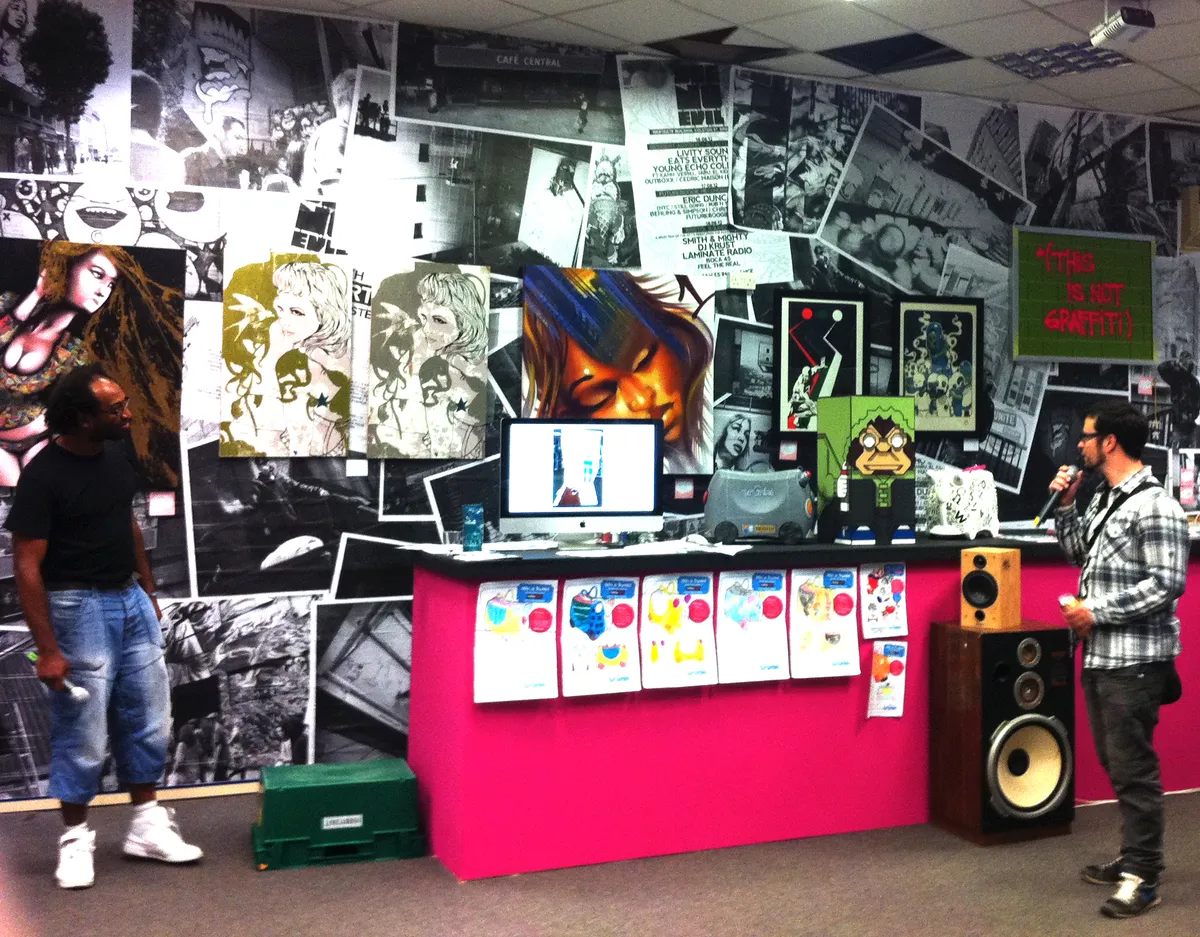 Me at the auction, giving a little speech about the piece to drum up bidding.
Bristol Street Art Culture
Being connected, even in a tiny way, to Bristol’s street art culture and the wider See No Evil project felt hugely significant at the time. The project sat right at the intersection of graffiti culture, illustration, character design, and DIY making — all things that heavily influenced the early direction of Squatties.
The experience also reinforced an important lesson: sometimes the backup plan survives the van journey better than the masterpiece.